
Waec 2025 Authentic Agric Science Practical Answers

Welcome to “EXAMRUNZ.COM” For Waec 2025 Expo
Questions & Answers
- WAEC 2025 AGRIC PRACTICAL QUESTION PAPER CLICK HERE
- WAEC 2025 AGRIC PRACTICAL QUESTION PAPER CLICK HERE
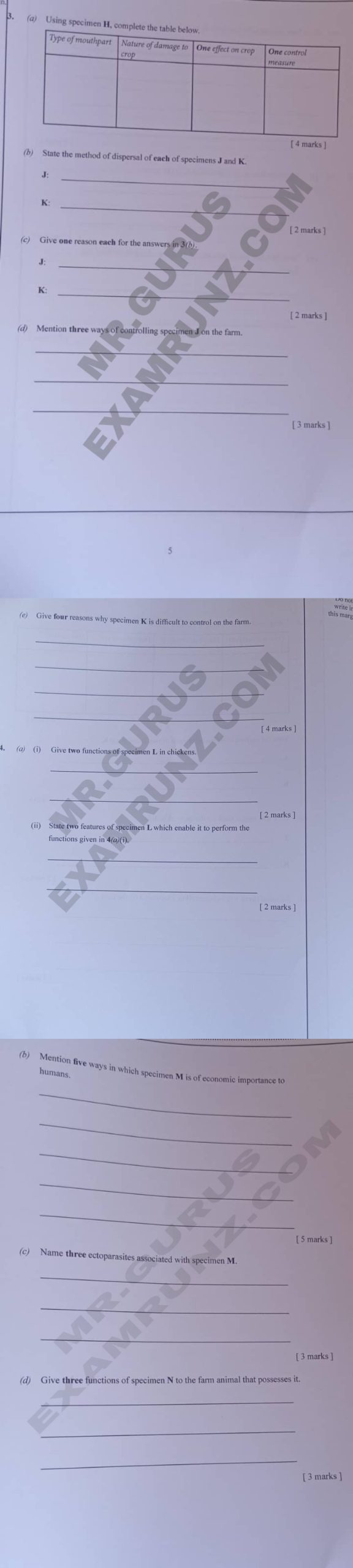
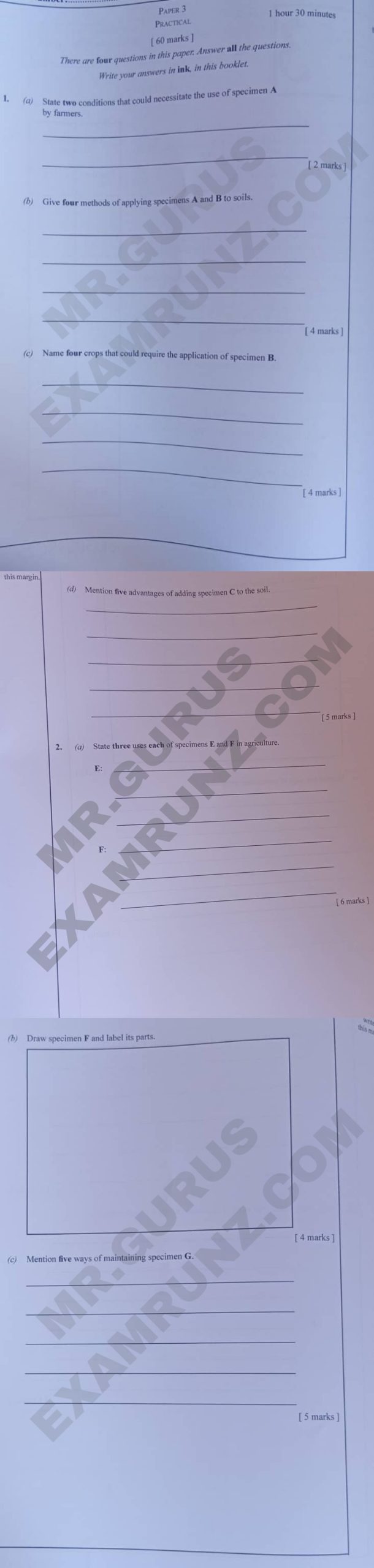
WAEC 2025 AGRIC PRACTICAL ANSWERS
NUMBER 1
(1a)
(i)Low soil nitrogen levels
(ii)Soil pH adjustment
(1b)
(i)Broadcasting: Spreading fertilizers evenly over the field.
(ii)Band placement: Placing fertilizers in bands near the seeds or plants.
(iii)Foliar application: Spraying fertilizers directly on plant leaves.
(iv)Fertigation: Applying fertilizers through irrigation systems.
(1c)
(i)Potatoes
(ii)Bananas
(iii)Sugarcane
(iv)Tomatoes
(1d)
(i)Nutrient enrichment
(ii)Improved soil structure
(iii)Increased microbial activity
(iv)Sustainable resource
(v)Reduced waste
==================
Waec 2025 Authentic Agric Practical Answers
NUMBER TWO
(2a)
SPECIMEN E:
(PICK THREE ONLY)
(i) Clearing bushes and shrubs
(ii) Harvesting crops like maize
(iii) Pruning branches of plants
(iv) Cutting wood for staking or fencing
(v) Weeding between crops
(vi) Digging shallow holes for planting
SPECIMEN F:
(PICK THREE ONLY)
(i) Digging soil for planting
(ii) Turning and loosening the soil
(iii) Mixing soil with fertilizers or manure
(iv) Removing weeds
(v) Transplanting seedlings
(vi) Leveling and shaping seedbeds
(2b)
(Draw the Diagram)
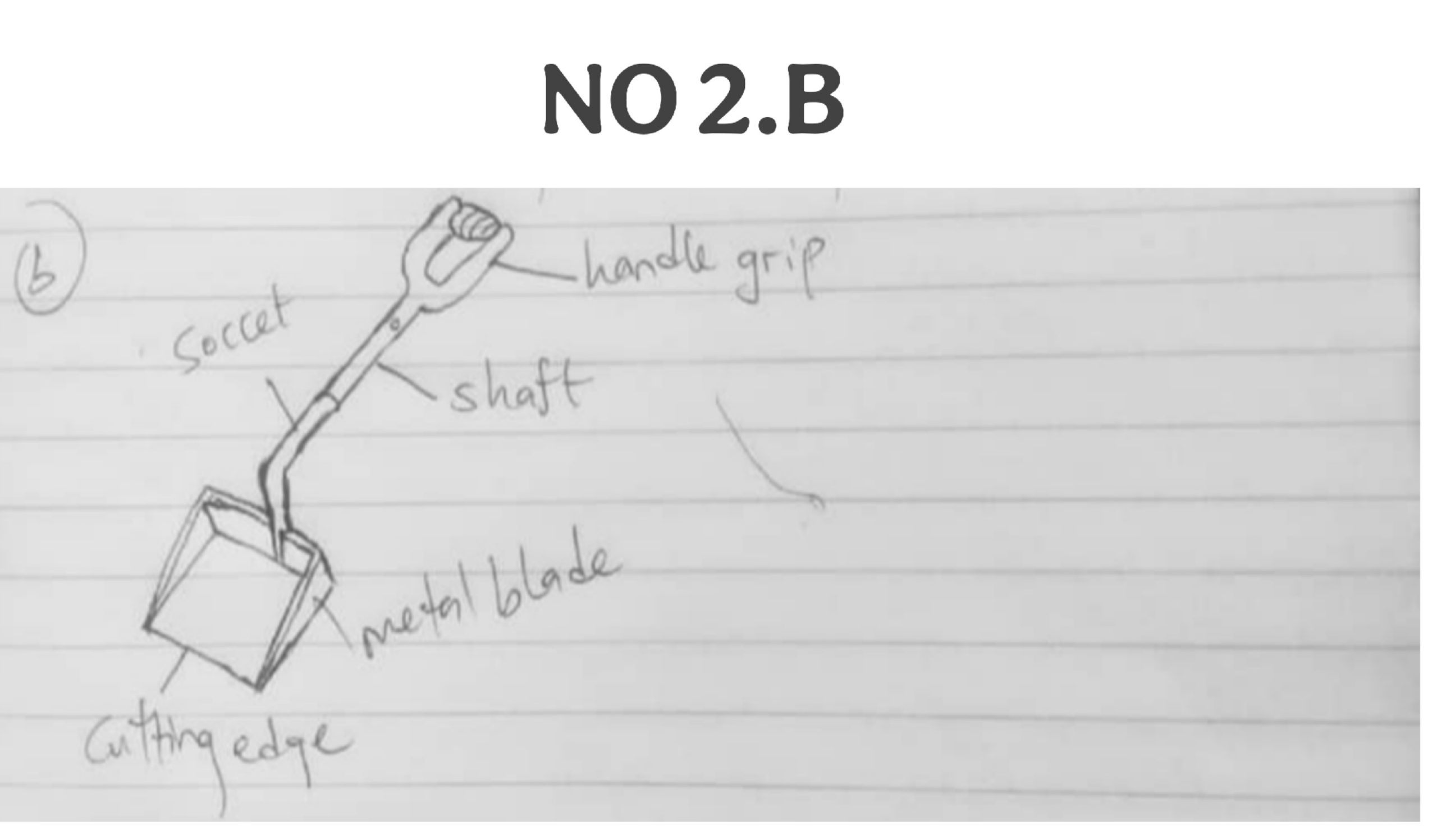
(2c)
(PICK FIVE ONLY)
(i) Clean regularly after each use
(ii) Lubricate the wheel regularly to reduce friction
(iii) Store in a dry, shaded place to prevent rust
(iv) Tighten all loose nuts and bolts
(v) Repaint rusting metal parts to prevent corrosion
(vi) Replace damaged or worn-out tyres
(vii) Avoid overloading to prevent frame damage
(viii) Inspect regularly and repair any damage promptly.
================================
NUMBER THREE
(3a)
[FILL IN THE TABLE]
=TYPE OF MOUTHPART=
Biting and chewing
=NATURE OF DAMAGE TO CROP=
Bore holes into yam tubers
=ONE EFFECT ON CROP=
Reduces market value/yield
=ONE CONTROL MEASURE=
Use of insecticides or pesticides
(3b)
J (Centrosema pubescens): Explosive mechanism (self-dispersal)
K (Spear grass): Wind dispersal
(3c)
J: The fruit bursts open when mature, scattering seeds.
K: The seeds are light and have hairy structures that allow them to be carried by wind.
(3d)
(i) Regular weeding or slashing before seed formation
(ii) Use of selective herbicides
(iii) Crop rotation or planting cover crops that suppress its growth
(3e)
(i) It has an extensive underground rhizome system, which allows it to regrow even after cutting.
(ii) It reproduces both by seeds and vegetative parts, making it spread rapidly.
(iii) Its seeds are easily dispersed by wind, leading to quick colonization of nearby areas.
(iv) It is resistant to many common herbicides, making chemical control less effective.
=================================
NUMBER FOUR
(4ai)
(PICK ANY TWO)
(i) Grinds and crushes food for easy digestion.
(ii) Mechanically breaks down hard food materials.
(iii) Aids in mixing food with digestive enzymes.
(iv) Facilitates the absorption of nutrients by making food particles smaller.
(v) Helps in regulating the flow of food through the digestive system.
(vi) Prevents indigestion by thoroughly processing fibrous or grainy feed.
(4aii)
(PICK ANY THREE)
(i) Has thick muscular walls for grinding.
(ii) Contains grit/stones that assist in breaking down food.
(iii) Tough inner lining that resists wear and tear from rough food.
(iv) Strong contractions to mash food particles effectively.
(v) Specialized shape that allows proper churning of food.
(vi) Located after the proventriculus to continue digestion efficiently.
(4b)
(PICK ANY FIVE)
(i) Used in the production of leather goods (shoes, belts, bags, jackets).
(ii) Used in making traditional drums and other musical instruments.
(iii) Provides income for livestock farmers and traders.
(iv) Exported to earn foreign exchange.
(v) Used in handicrafts and artworks.
(vi) Utilized in making seat covers and upholstery.
(v) Sometimes used in bookbinding.
(vii) Employed in traditional medicine and rituals in some cultures.
(viii) Provides employment in the leather and tanning industries.
(4c)
(PICK ANY THREE)
(i) Ticks
(ii) Lice
(iii) Mites
(iv) Fleas
(v) Keds
(4d)
(PICK ANY THREE)
(i) Used for defense against predators.
(ii) Used in fighting and establishing dominance in herds.
(iii) Plays a role in mating displays and competition.
(iv) Helps dissipate body heat (thermoregulation).
(v) Used to dig or break foliage while foraging.
(vi) Serves as a symbol of status or age within a herd.
(vii) May help in protecting the animal’s head during fights.
COMPLETED
— — — — — — — —
Note:All theory Answers was Sent To Our Subscribed Candidates on WhatsApp & on Our Online password protect Answers page.Click Here To Subscribe For All Subject
Contact us on WhatsApp – 07034630271
Waec 2025 Authentic Agric Practical Answers
Waec 2025 Authentic Agric Practical Answers
Waec 2025 Authentic Agric Practical Answers.
Waec 2025 Authentic Agric Practical Answers
Waec 2025 Authentic Agric Practical Answers
Waec 2025 Authentic Agric Practical Answers
Waec 2025 Authentic Agric Practical Answers
Be the first to comment