
Authentic 2025 Neco Biology Practical Answers
Welcome to “EXAMRUNZ.COM” For Neco 2025 Expo
Questions & Answers

Friday 27th June, 2025
Biology (Practical) 10:00 am -12:00 noon
NECO BIOLOGY PRACTICAL ANSWER 2025
(1ai)
A: Housefly
B; Spider
C; Pride of Barbados Flower
D; Bean seed
E; Butterfly
(1aii)
Specimen; A; – Insecta
Specimen; B; – Arachnida
(1bi)
(i)Typhoid fever
(ii)Dysentery
(1bii)
(i)Spongy proboscis.
(ii)Hairy body and legs.
(1biii)
Specimen; A;
(i)Housefly have six legs (like all insects)
(ii)Housefly have a distinct head, thorax, and abdomen
Specimen; B;
(i)spiders have eight legs.
(ii)spiders have a cephalothorax and abdomen.
(1ci)
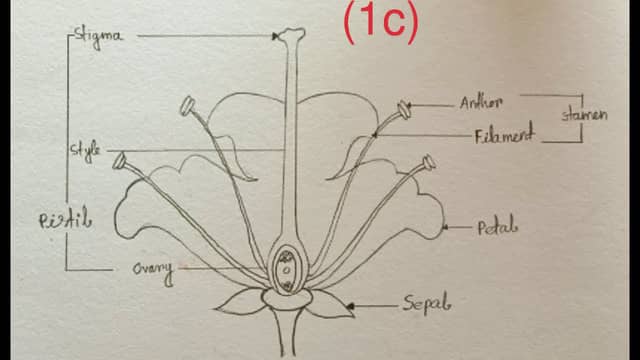
(1cii)
Insecta
(1ciii)
(i)Colorful wings: With scales that give them vibrant colors and patterns.
(ii)Proboscis: A long, coiled tube used for feeding on nectar.
(iii)Compound eyes: Large eyes that provide wide-angle vision.
(iv)Antennae: Used for sensing the environment.
(1civ)
As they feed on nectar from flowers, they transfer pollen from one flower to another, facilitating the reproduction of the plant.
(1cv)
(i)Proboscis: Allows them to reach nectar deep within flowers, coming into contact with pollen.
(ii)Hairy body: Pollen can stick to their bodies and be transferred to other flowers.
(2ai)
F; Crayfish
G; Grasshopper
H; Humerus of a Rabbit
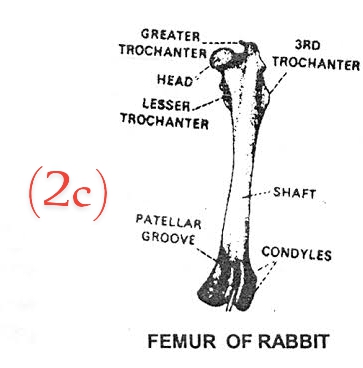
I; Femur of a Rabbit
J; Orange Fruit
(2aii)
Specimen; F; Malacostraca
Specimen; G; Insecta
(2aiii)
Food Source: Crayfish are an important food source for humans and are commercially harvested or farmed in many parts of the world.
(2aiv)
Specimen; F;
(i)They are primarily aquatic, living in freshwater or saltwater environments
(ii)They have gills for breathing underwater to survive.
Specimen; G;
(i)They are terrestrial, living on land.
(ii)They have a tracheal system for breathing air directly to their tissues.
(2bi)
Specimen; H; Located in the upper arm (forelimb), connecting the shoulder to the elbow.
Specimen; I; Located in the thigh (hindlimb), connecting the hip to the knee.
(2bii)
(i)Scapula (shoulder blade)
(ii)Radius and Ulna
(2c)
(3ai)
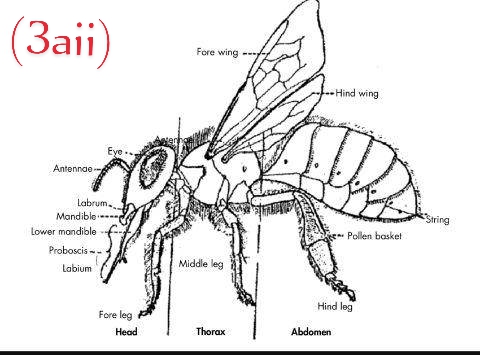
K; Honey Bee
L; Land Snail
M; Guava Fruit
N; Irish Potato tuber
O; Sweet Potato tuber
(3aii)
(3bi)
Specimen; K; Insecta
Specimen; L; Gastropoda
(3bii)
(i)Shell: Presence of a spiral shell for protection.
(ii)Foot: A flat, muscular foot used for locomotion.
(iii)Tentacles: Presence of tentacles on the head for sensory purposes.
(iv)Radula: A radula (a tongue-like structure with tiny teeth) used for feeding.
(3biii)
Specimen; K; Production of honey and pollination services.
Specimen; L; Some species are considered a delicacy and are farmed for food (escargot), contributing to local economies.
(3biv)
The type of placentation observed is axile placentation.
(3ci)
Specimen; N; Stem tuber
Specimen; O; Root tuber
(3cii)
Irish potatoes are propagated by vegetative propagation, specifically by planting seed potatoes (pieces of the tuber containing “eyes”).
COMPLETED
HOW WE SEND ANSWERS:
Do you Wish To Subscribe For Your Nine (9) Subjects or All Subjects at Once? Click Here
We all Also Available in JUPEB AND IJMB Examination
Thank you.
Authentic 2025 Neco Biology Practical Answers
Authentic 2025 Neco Biology Practical Answers
Authentic 2025 Neco Biology Practical Answers
Authentic 2025 Neco Biology Practical Answers
Authentic 2025 Neco Biology Practical Answers
Authentic 2025 Neco Biology Practical Answers
If you found this post helpful or have any questions, please leave a comment below.