
2025 Waec Authentic Health Education Practica Answers
CLICK BELOW LINKS FOR WAEC 2025 HEALTH EDUCATION PRACTICAL QUSTION PAPER
- Health Education Question paper
- Health Education Question paper.
- Health Education Qustions paper
- Health Education Qustions paper
- Health Education Question paper
- Health Education Question paper
- Health Education Question paper
- Health Education Question paper

WAEC HEALTH EDUCATION PRATICAL INSTRUCTIONS
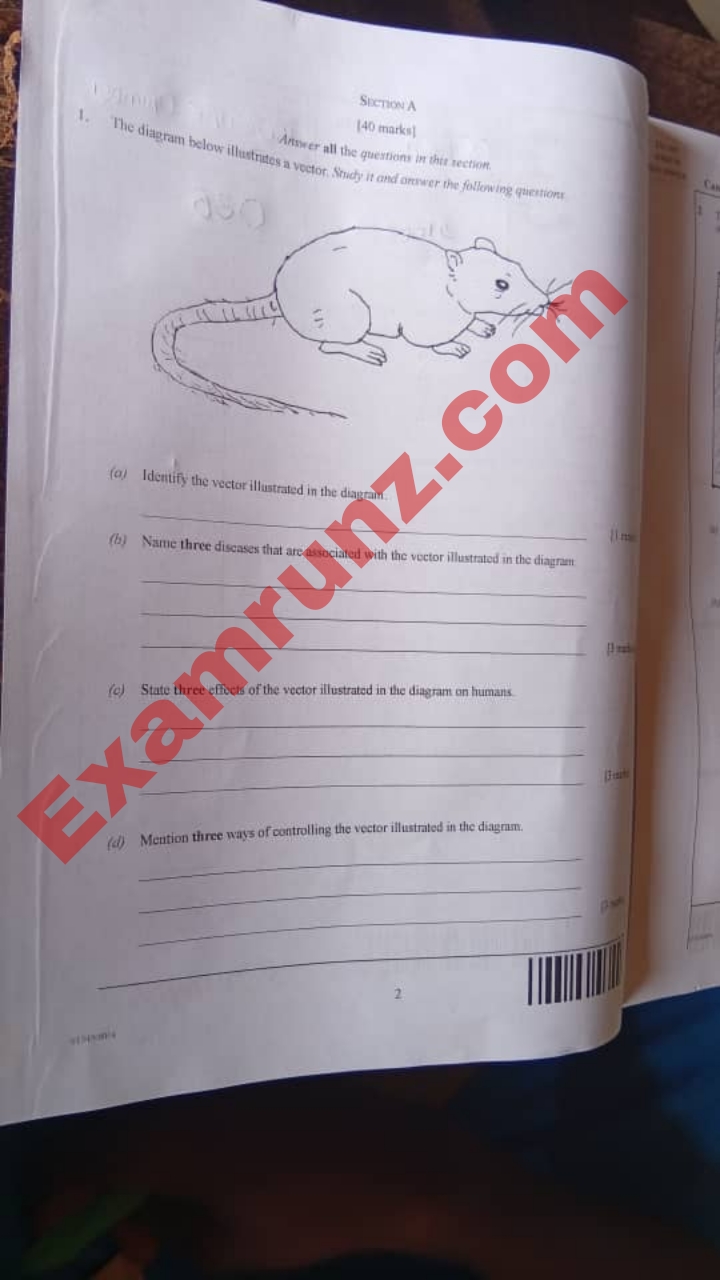
SECTION A
ANSWER ALL QUESTIONS IN THIS SECTION.
QUESTION 1
QUESTION 2
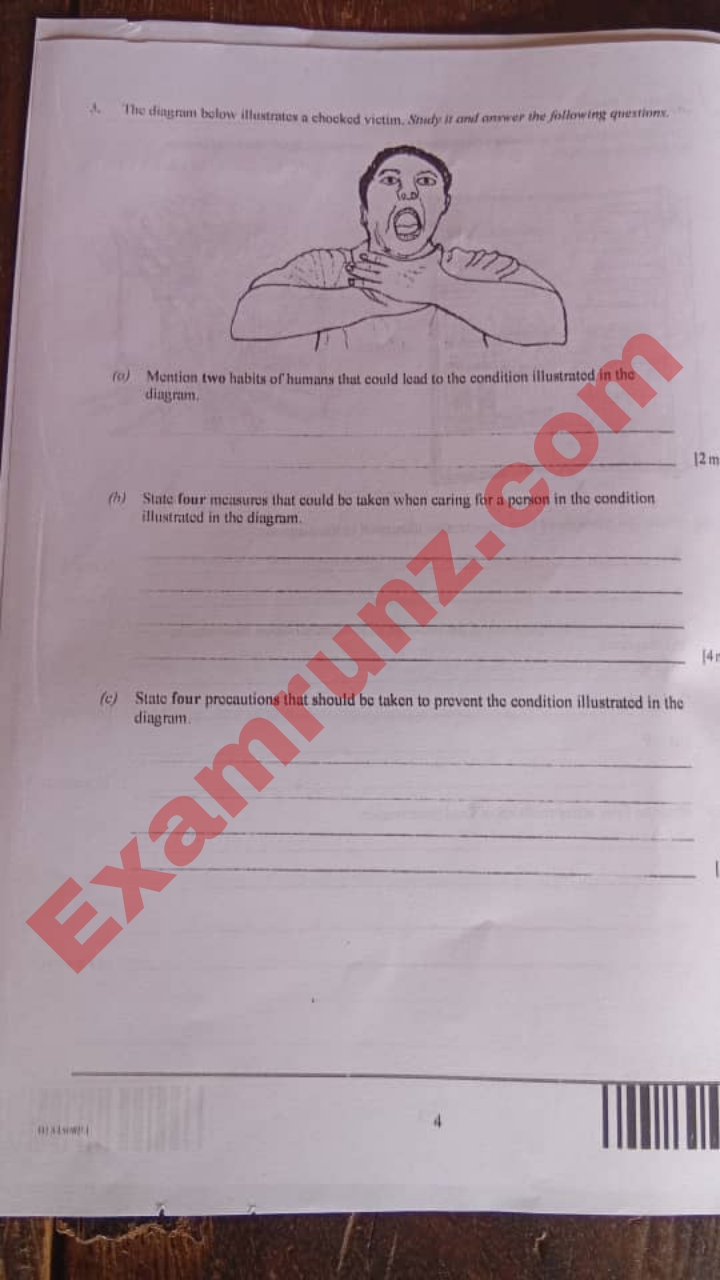
QUESTION 3
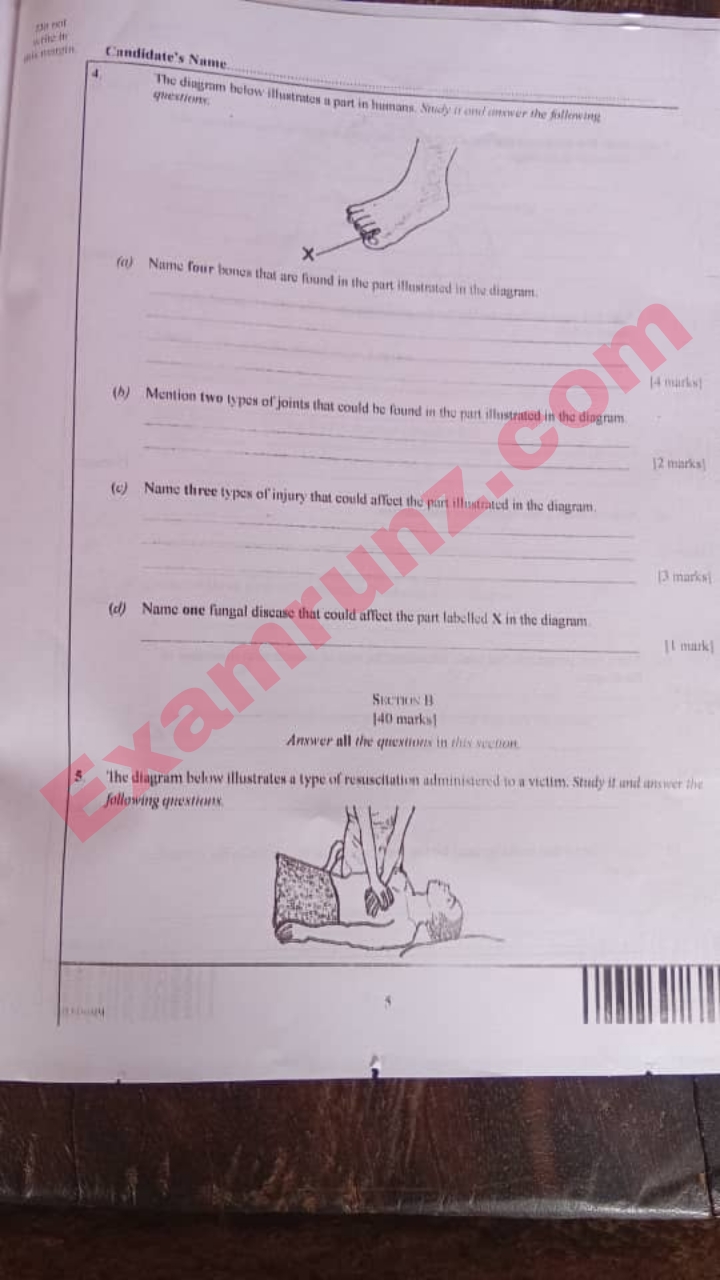
QUESTION 4
SECTION B
ANSWER ALL QUESTIONS IN THIS SECTION.
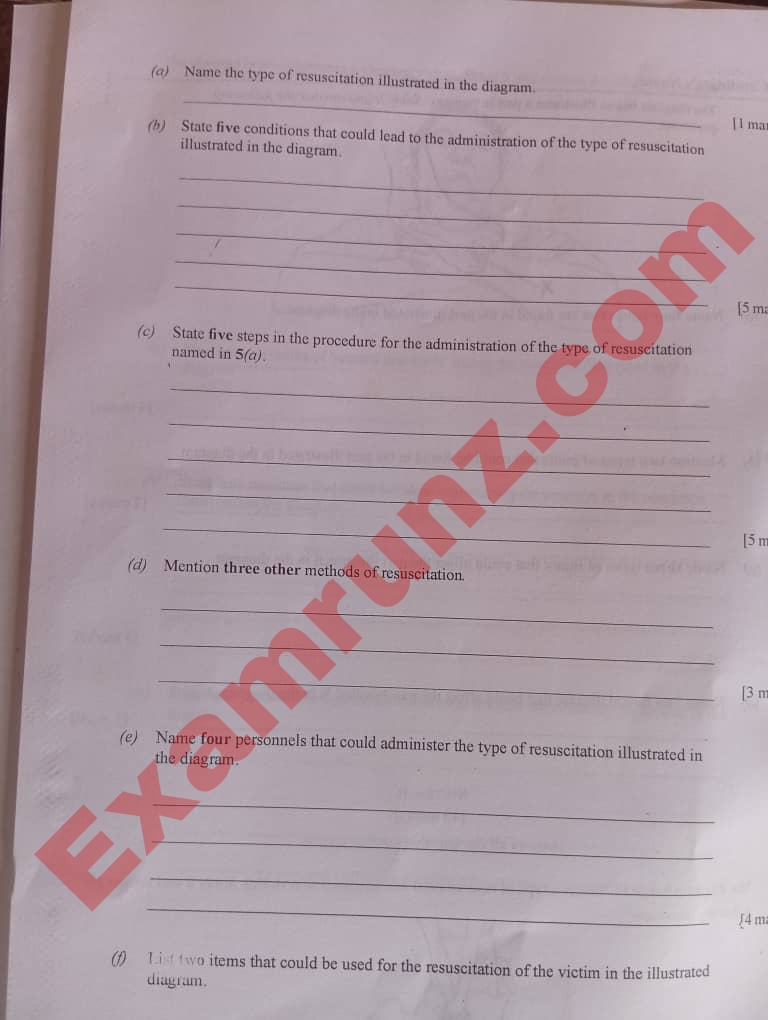
QUESTION 5
QUESTION 6
WAEC HEALTH EDUCATION PRACTICAL ANSWERS EXPO
(1a)
Rat
(1b)
(PICK THREE ONLY)
(i) Plague
(ii) Leptospirosis
(iii) Rat-bite fever
(iv) Hantavirus infection
(v) Salmonellosis
(vi) Lassa fever
(vii) Tularemia
(1c)
(PICK THREE ONLY)
(i) Transmission of life-threatening diseases
(ii) Contamination of food and water supplies
(iii) Damage to crops and stored food
(iv) Structural damage to buildings and wiring
(v) Psychological stress and fear
(vi) Financial loss due to property damage and disease treatment
(vii) Increased risk of zoonotic outbreaks in communities
(1d)
(PICK THREE ONLY)
(i) Proper disposal of garbage and waste
(ii) Sealing cracks and holes in buildings
(iii) Storing food in sealed containers
(iv) Using traps to capture rats
(v) Applying rodenticides responsibly
(vi) Maintaining clean and clutter-free environments
(vii) Eliminating sources of standing water and food scraps
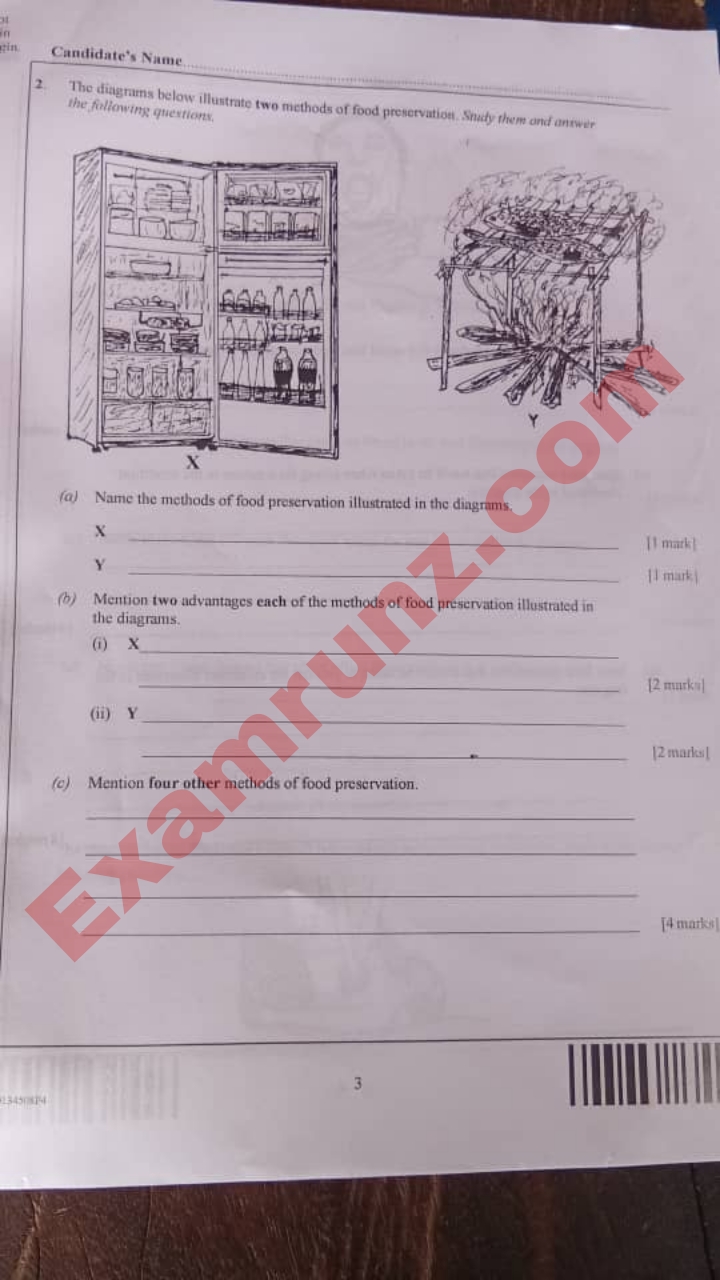
(2a)
X: Refrigeration
Y: Smoking
(2bi)
X – REFRIGERATION:
(PICK TWO ONLY)
(i) Slows down the growth of bacteria and molds
(ii) Preserves the freshness, taste, and texture of food
(iii) Reduces food spoilage and waste
(iv) Allows storage of perishable foods like milk, meat, and vegetables
(v) Convenient and easy to use for daily food storage
(2bii)
Y – SMOKING:
(PICK TWO ONLY)
(i) Preserves food by reducing moisture content
(ii) Imparts a unique smoky flavor to food
(iii) Deters insects and microorganisms from contaminating food
(iv) Extends the shelf life of fish, meat, and some vegetables
(v) Requires no refrigeration, making it suitable for rural and remote areas
(2c)
(PICK FOUR ONLY)
(i) Drying
(ii) Salting
(iii) Canning
(iv) Freezing
(v) Pickling
(vi) Pasteurization
(vii) Fermentation
(viii) Vacuum sealing
(3a)
(PICK TWO ONLY)
(i) Eating too quickly without properly chewing food.
(ii) Talking or laughing while eating.
(iii) Eating while lying down.
(iv) Drinking alcohol excessively before or during meals.
(v) Putting non-food objects into the mouth.
(3b)
(i) Encourage the person to cough forcefully to try to dislodge the object.
(ii) Perform the Heimlich maneuver if the person cannot cough or speak.
(iii) Call emergency medical services immediately if the object is not expelled.
(iv) If the person becomes unconscious, begin CPR and continue until professional help arrives.
(3c)
(PICK FOUR ONLY)
(i) Chew food thoroughly before swallowing.
(ii) Avoid talking or laughing while eating.
(iii) Do not eat while lying down.
(iv) Supervise young children during meals.
(v) Avoid giving small, hard foods to infants and toddlers.
(vi) Keep small objects like coins and toy parts away from children’s reach.
(vii) Educate children not to put non-food items in their mouths.
(viii) Avoid alcohol consumption during meals, especially in excess, as it may dull the swallowing reflex.
(4a)
(i) Tibia
(ii) Fibula
(iii) Talus
(iv) Calcaneus
(4b)
(i) Hinge joint
(ii) Gliding joint
(4c)
(PICK ANY THREE)
(i) Sprain
(ii) Fracture
(iii) Dislocation
(iv) Contusion (bruise)
(v) Tendon rupture
(4d)
(PICK ANY ONE)
(i) Athlete’s foot
(ii) Ringworm
(iii) Toenail fungus
(iv) Candidiasis
(5a)
Mouth-to-mouth resuscitation
(5b)
(PICK ANY FIVE)
(i) Drowning
(ii) Choking
(iii) Electric shock
(iv) Drug overdose
(v) Suffocation
(vi) Cardiac arrest
(vii) Asthma attack with respiratory failure
(viii) Head trauma causing unconsciousness and stopped breathing
(5c)
(PICK ANY FIVE)
(i) Check if the victim is responsive and breathing.
(ii) Call for emergency medical help.
(iii) Place the victim on their back on a flat surface.
(iv) Open the airway by tilting the head back and lifting the chin.
(v) Pinch the nose shut and create a seal over the victim’s mouth.
(vi) Give two slow breaths, watching for the chest to rise.
(vii) Continue with one breath every 5–6 seconds if there’s a pulse but no breathing.
(viii) Recheck pulse and breathing every 2 minutes, and continue until medical help arrives.
(5d)
(PICK ANY THREE)
(i) Mouth-to-nose resuscitation
(ii) Chest compressions (Cardiopulmonary Resuscitation – CPR)
(iii) Use of Automated External Defibrillator (AED)
(iv) Compression-only CPR
(v) Bag-valve-mask ventilation
(vi) Mechanical ventilator support (in hospitals)
(5e)
(PICK ANY FOUR)
(i) Paramedics
(ii) Nurses
(iii) Doctors
(iv) Trained first aiders
(v) Lifeguards
(vi) Firefighters
(vii) Emergency medical technicians (EMTs)
(5f)
(PICK ANY FOUR)
(i) Pocket face mask
(ii) Bag-valve mask (BVM)
(iii) Oxygen cylinder with mask
(iv) Automated External Defibrillator (AED)
(v) Suction device
(vi) Airway adjuncts (e.g., oropharyngeal airway)
(vii) Resuscitation manikin (for training)
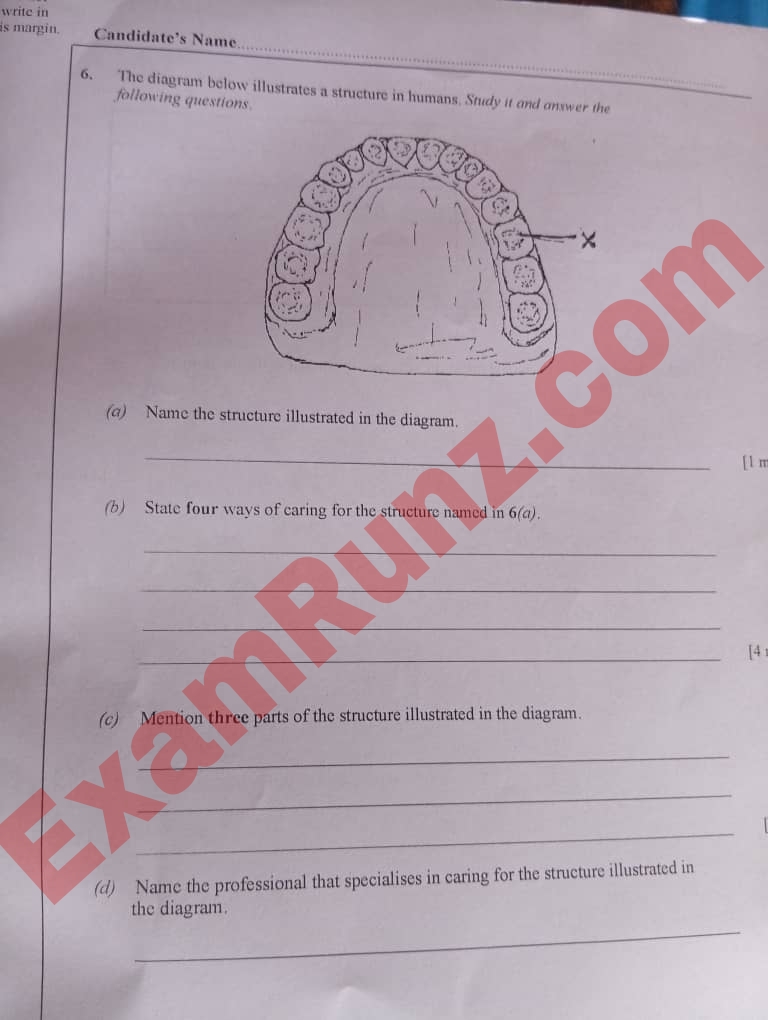
(6a)
Upper jaw (Maxilla)
(6b)
(i) Brush teeth at least twice daily with fluoride toothpaste.
(ii) Floss regularly to remove food particles between teeth.
(iii) Avoid excessive sugary foods and drinks to prevent tooth decay.
(iv) Visit a dentist regularly for checkups and professional cleaning.
(6c)
(i) Teeth
(ii) Gums
(iii) Alveolar bone (socket of the teeth)
(6d)
Dentist
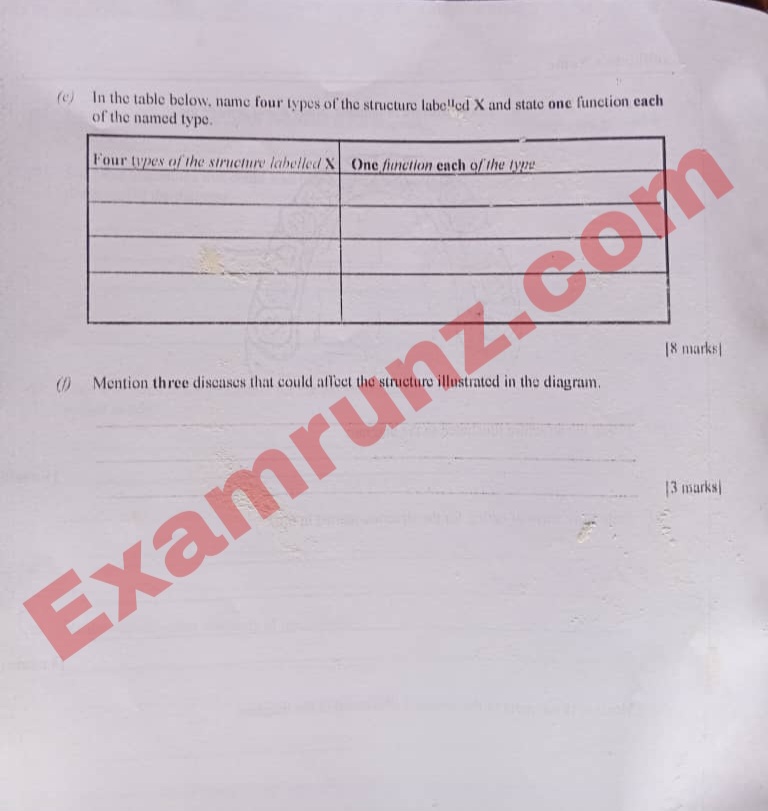
(6e)
=TABULATE=
Four types of the structure labelled X
(i) Red blood cell (Erythrocyte)
(ii) White blood cell (Leukocyte)
(iii) Platelet (Thrombocyte)
(iv) Lymphocyte
One function each of the type
(i) Transports oxygen from lungs to body tissues
(ii) Defends the body against infections
(iii) Helps in blood clotting
(iv) Produces antibodies for immune response
(6f)
(i) Anaemia (affects red blood cells)
(ii) Leukaemia (affects white blood cells)
(iii) Thrombocytopenia (affects platelets)
Completed
Note: Our Subscribed candidates Recives All Qustions and Answers Before Exam
2025 Waec Authentic Health Education Practica Answers
2025 Waec Authentic Health Education Practica Answers
2025 Waec Authentic Health Education Practica Answers
2025 Waec Authentic Health Education Practica Answers
2025 Waec Authentic Health Education Practica Answers
2025 Waec Authentic Health Education Practica Answers
2025 Waec Authentic Health Education Practica Answers
2025 Waec Authentic Health Education Practica Answers
2025 Waec Authentic Health Education Practica Answers
2025 Waec Authentic Health Education Practica Answers
2025 Waec Authentic Health Education Practica Answers
If you found this post helpful or have any questions, please leave a comment below.