
Authentic 2025 Neco Book keeping Answers
Welcome to “EXAMRUNZ.COM” For Neco 2025 Expo
Questions & Answers

Thursday 26th June, 2025
Bookkeeping (Objective & Essay) 10:00 am – 1:50 pm
Book-keeping Objective
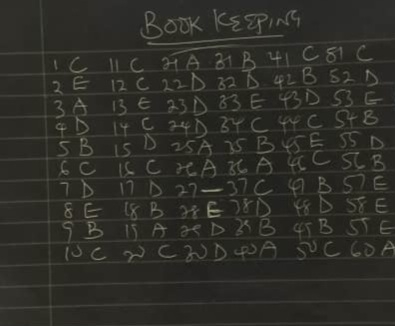
NECO BOOK KEEPING THEORY
(1a)
(i) Sole Proprietorship
(ii) Partnership
(iii) Limited Liability Company (LLC)
Advantages of Sole Proprietorship:
1. It is easy and cheap to set up.
2. The owner has total control over decisions and profits.
(1b)
(i) Recording opening entries
(ii) Recording closing entries
(iii) Recording correction of errors
(iv) Recording non-regular transactions
(v) Recording acquisition of fixed assets on credit
(vi) Recording dishonour of cheques
(vii) Recording adjustments and rectifications
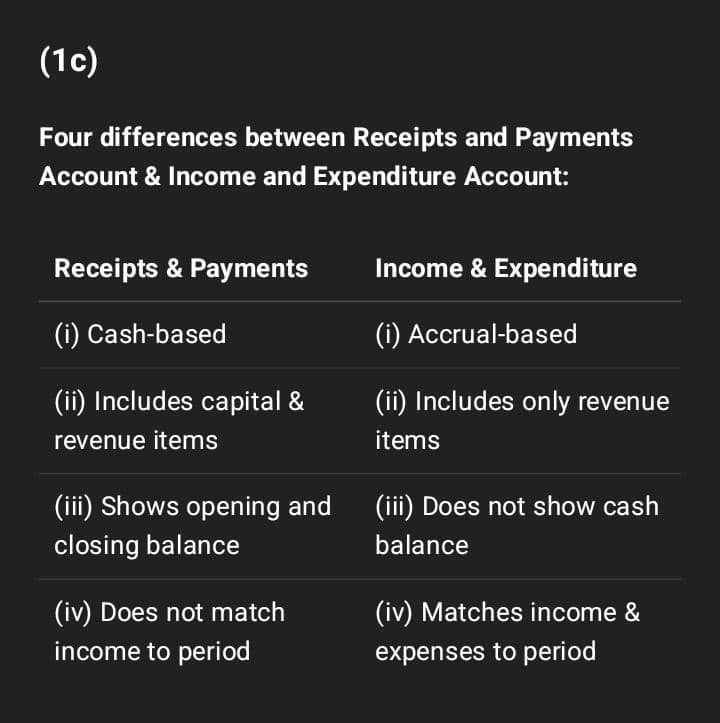
(2a)
A trading account is prepared to determine the gross profit or gross loss of a business from buying and selling goods during an accounting period. It shows the difference between sales and cost of goods sold (COGS).
(2b)
(i) Fixed Capital:
This is capital invested in long-term assets like buildings, machinery, and land. It is not intended for day-to-day operations.
(ii) Working Capital:
This is the capital used for daily operations of the business. It is calculated as current assets minus current liabilities.
(iii) Loan Capital:
This is money borrowed by the business from external sources such as banks, to be repaid with interest.
(iv) Equity Capital:
This refers to the money invested in the business by its owners/shareholders in return for ownership.
(v) Venture Capital:
This is funding provided by investors to startups or small businesses with growth potential, often in exchange for equity or partial ownership.
(2c)
(i) Business Entity Concept – The business is treated separately from its owner.
(ii) Money Measurement Concept – Only items measurable in money are recorded.
(iii) Going Concern Concept – Assumes the business will continue operating in the foreseeable future.
(iv) Accrual Concept – Income and expenses are recorded when they occur, not when cash is received or paid.
(v) Consistency Concept – Accounting methods should be used consistently from one period to another.
(vi) Prudence Concept – Profits should not be overstated, and all liabilities should be recorded when probable.
(3a)
(i) First In First Out (FIFO):
This method assumes that the earliest (first) stock purchased is the first to be issued or sold. It values closing stock using the cost of the most recent purchases.
(ii) Last In First Out (LIFO):
This method assumes that the most recent (last) stock purchased is the first to be issued or sold. It values closing stock using the cost of the earliest purchases.
(iii) Weighted Average Price (WAP):
This method calculates the average cost of all available stock (total cost divided by total quantity). All stock issued or remaining is valued at this average cost
(3b)
(i) Salaries and wages
(ii) Rent and rates
(iii) Insurance expenses
(iv) Depreciation of assets
(v) Repairs and maintenance
(vi) Advertising expenses
(vii) Electricity and water bills
(3c)
(i) Invoice
(ii) Receipt
(iii) Credit note
(iv) Debit note
(v) Cheque counterfoil
(vi) Payment voucher
(4a)
A suspense account is a temporary account used in bookkeeping to record transactions when there is uncertainty about where they should be posted. It helps to balance the trial balance temporarily until the error is identified and corrected, after which the correct account is debited or credited, and the suspense account is cleared.
(4b)
(i) It helps in controlling petty cash expenses.
(ii) It reduces the risk of fraud or misuse of funds.
(iii) It allows easy accountability and transparency of petty cash.
(iv) It ensures that records are always up to date.
(v) It saves time as petty expenses are recorded and handled separately from the main cashbook.
(vi) It simplifies auditing and tracking of small transactions.
(vii) It reduces clerical work in the main cashbook.
(4c)
Fixed Assets :
(i) Land
(ii) Buildings
(iii) Motor vehicles
(iv) Machinery
(v) Furniture and fittings
Four Current Assets:
(i) Cash at hand
(ii) Debtors
(iii) Inventory (stock)
(iv) Bank balance
HOW WE SEND ANSWERS:
Do you Wish To Subscribe For Your Nine (9) Subjects or All Subjects at Once? Click Here
We all Also Available in JUPEB AND IJMB Examination
Thank you.
Authentic 2025 Neco Book keeping Answers
Authentic 2025 Neco Book keeping Answers
Authentic 2025 Neco Book keeping Answers
Authentic 2025 Neco Book keeping Answers
Authentic 2025 Neco Book keeping Answers
Authentic 2025 Neco Book keeping Answers
If you found this post helpful or have any questions, please leave a comment below.