
WAEC GCE 2026 Physics Questions and Answers
Do you know you can get WAEC GCE 2026 Physics Questions and Answers
For Gce private candidates examination Ahead of exam time ? Welcome to Examrunz.com your trusted platform for WAEC GCE 2026 Physics Questions and Answers candidates who are writing waec gce physics exam should not panic Examrunz Team are here with solutions

WAEC GCE 2026 Physics Questions and Answers
This page is designed to help candidates get correct exposure for WAEC GCE 2026 Physics Questions and Answers Midnight/5am Before Exam time
Thursday, 15th October, 2026
Physics 2 (Essay) – 1hr 30mins – 09:30 hrs – 11:00 hrs.
Physics 1 (Objective) – 1hr 15mins – 11:00 hrs – 12:15 hrs
(1a)
(PICK ANY TWO)
(i) Simple construction: A junction diode has a simple structure, making it easy to use in rectifier circuits.
(ii) Low cost: Junction diodes are relatively cheap and affordable compared with many other electronic components.
(iii) Small size: They are compact and occupy little space in electronic devices.
(iv) High efficiency: Junction diodes can convert alternating current (AC) into direct current (DC) with relatively low power loss.
(v) Long lifespan: They can operate for a long time when used within their rated limits.
(vi) Low power consumption: They require little power to operate compared with some other rectifying devices.
(vii) Fast switching: Junction diodes can switch between conducting and non-conducting states quickly.
(viii) Low maintenance: They have no moving parts and generally require little maintenance.
(ix) Reliable operation: They provide dependable rectification when operated under suitable conditions.
(x) Easy installation: They can be easily connected to electronic circuits for converting AC into DC.
(1b)
(PICK ANY ONE)
(i) Voltage drop: A silicon junction diode has a forward voltage drop of approximately 0.7 V, which causes power loss.
(ii) Heat generation: The diode generates heat during operation, especially when carrying high currents.
(iii) Limited current capacity: A diode can only carry current up to its rated maximum value without damage.
(iv) Limited reverse voltage: If the reverse voltage exceeds the diode’s rated limit, it may break down and become damaged.
(v) Pulsating DC output: A simple rectifier produces pulsating DC rather than perfectly smooth DC.
(vi) Requires filtering: Additional components, such as capacitors and inductors, may be needed to smooth the rectified output.
(vii) Temperature sensitivity: Changes in temperature can affect the diode’s electrical characteristics and performance.
(viii) Power loss: Some electrical energy is lost as heat during the rectification process.
(ix) Not suitable for all frequencies: Some junction diodes cannot operate efficiently at very high frequencies.
(x) Risk of damage: Excessive current, overheating or voltage surges can damage the diode and cause the rectifier circuit to fail.
(2a)
A hologram is a three-dimensional image produced by recording and reconstructing the light waves scattered from an object, usually with the aid of laser light.
(2b)
(PICK ANY TWO)
(i) Three-dimensional appearance: A holographic image appears to have height, width and depth.
(ii) Depth perception: It gives the viewer a sense of distance between different parts of the image.
(iii) Parallax effect: The image appears different when viewed from different angles.
(iv) Realistic appearance: It can closely resemble the original object in shape and appearance.
(v) No conventional lens image required: A hologram records light-wave information rather than simply recording an ordinary photograph of the object.
(vi) Light-dependent visibility: The holographic image must be illuminated appropriately to be seen clearly.
(vii) Image reconstruction: The original object’s appearance can be reconstructed from the recorded interference pattern using suitable illumination.
(viii) Multiple viewing angles: Different perspectives of the object can be observed by moving the viewer’s position.
(3)
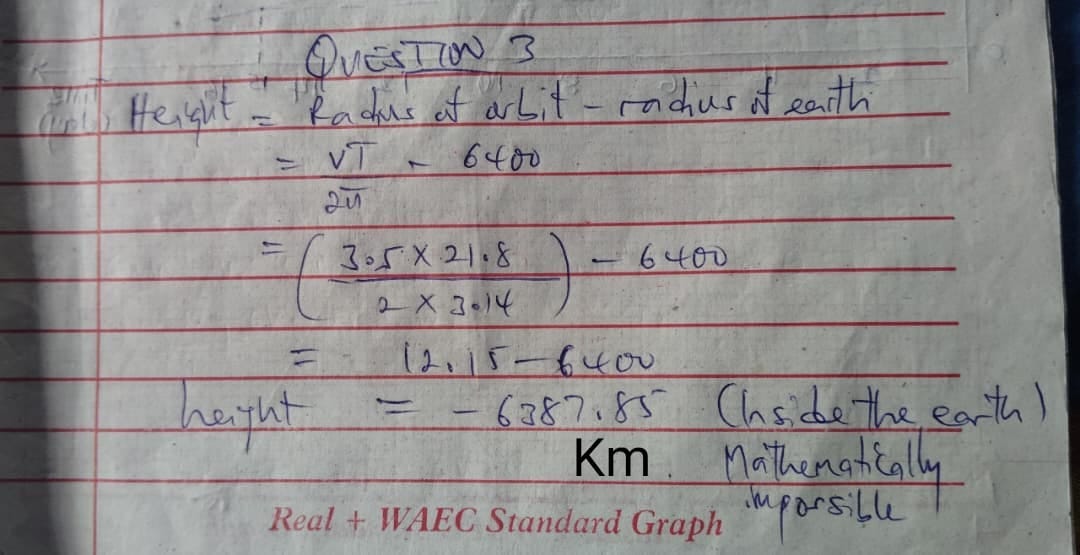
(4)
(PICK ANY THREE)
(i) Monochromatic.
(ii) Coherent.
(iii) Highly directional.
(iv) High intensity.
(v) Highly collimated.
(vi) Can be focused to a very small spot.
(5)
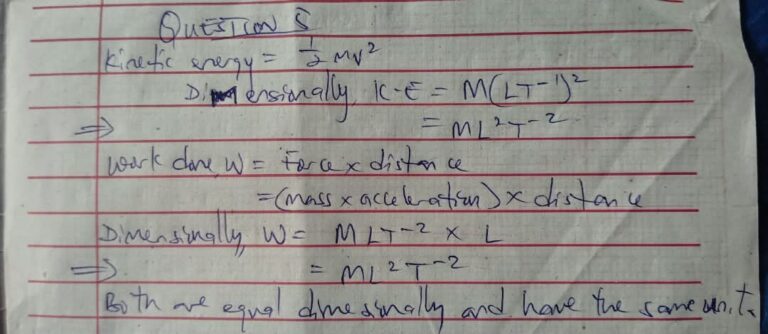
(7)
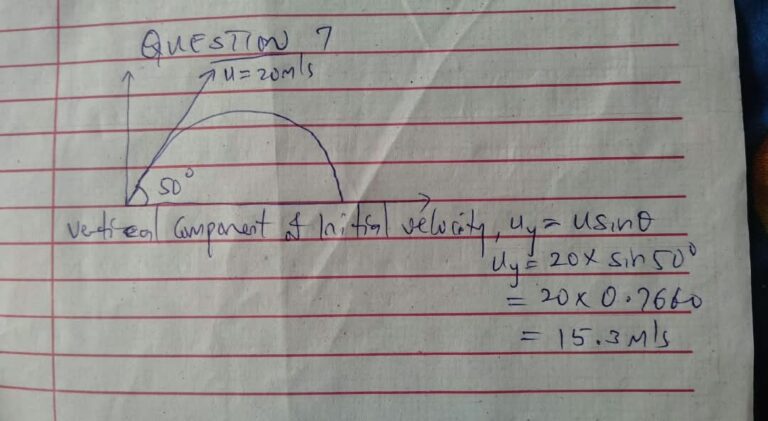
(8)
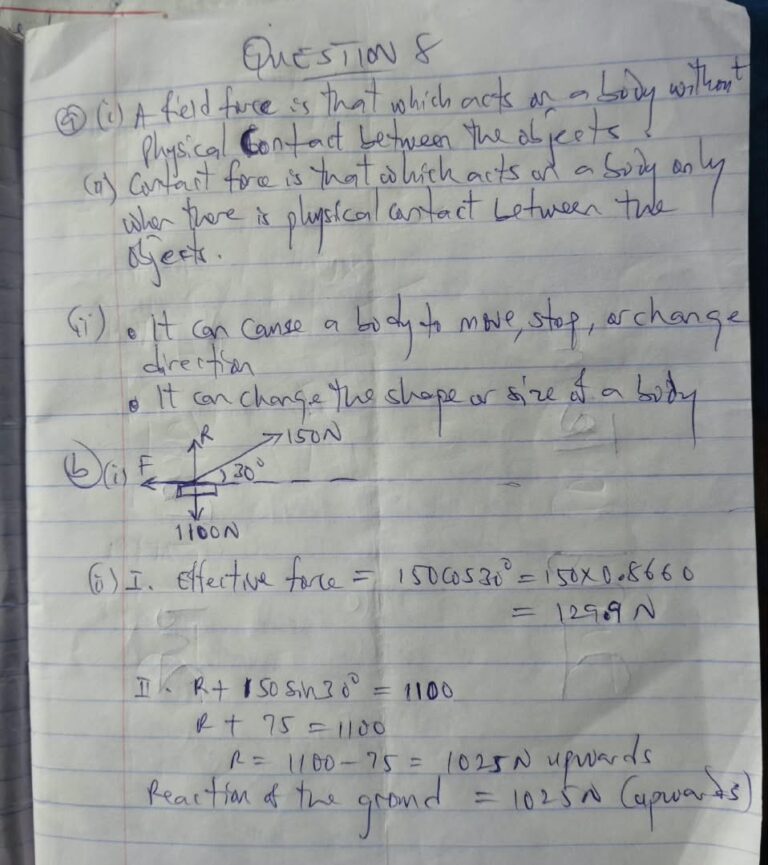
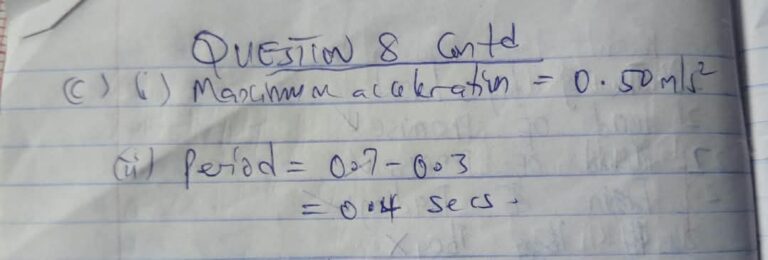
(9)
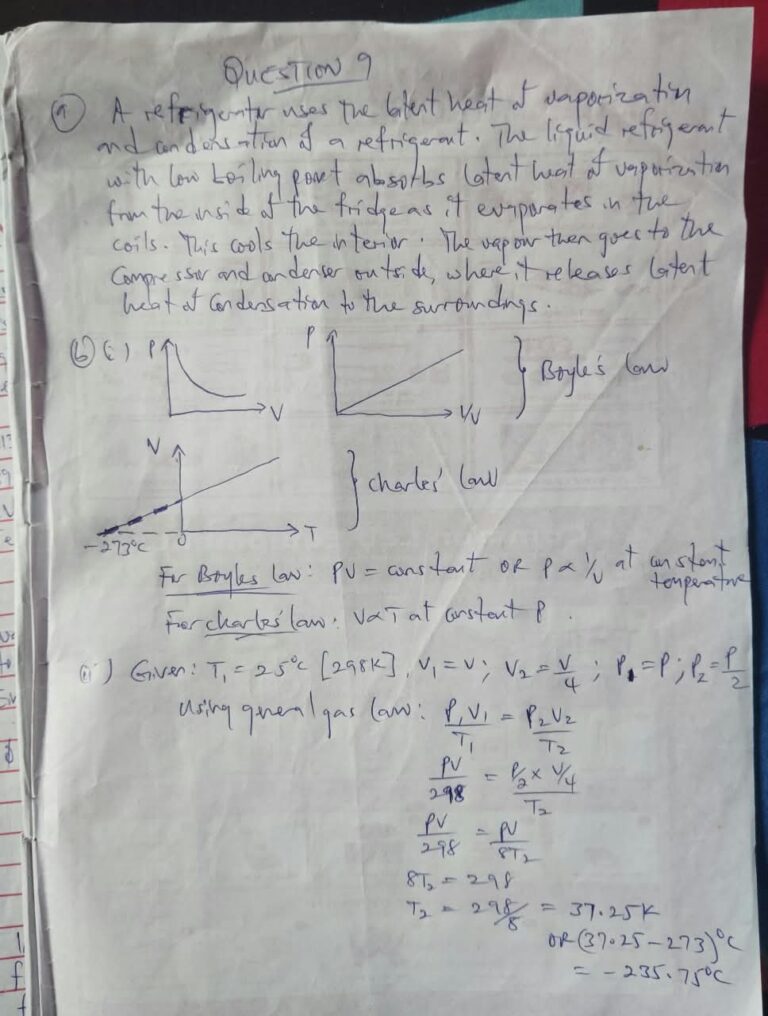
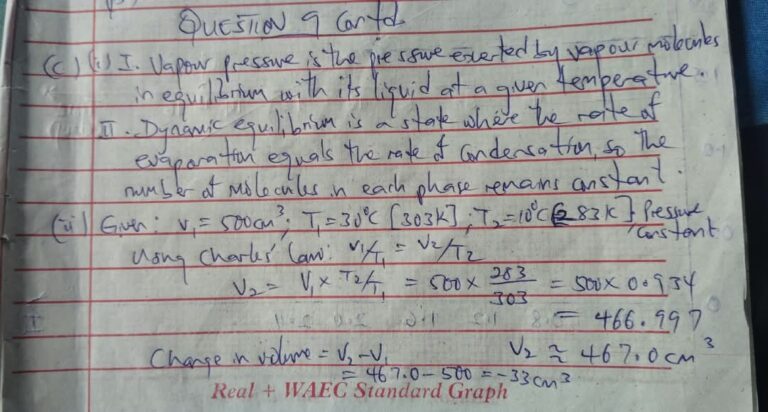
(11)
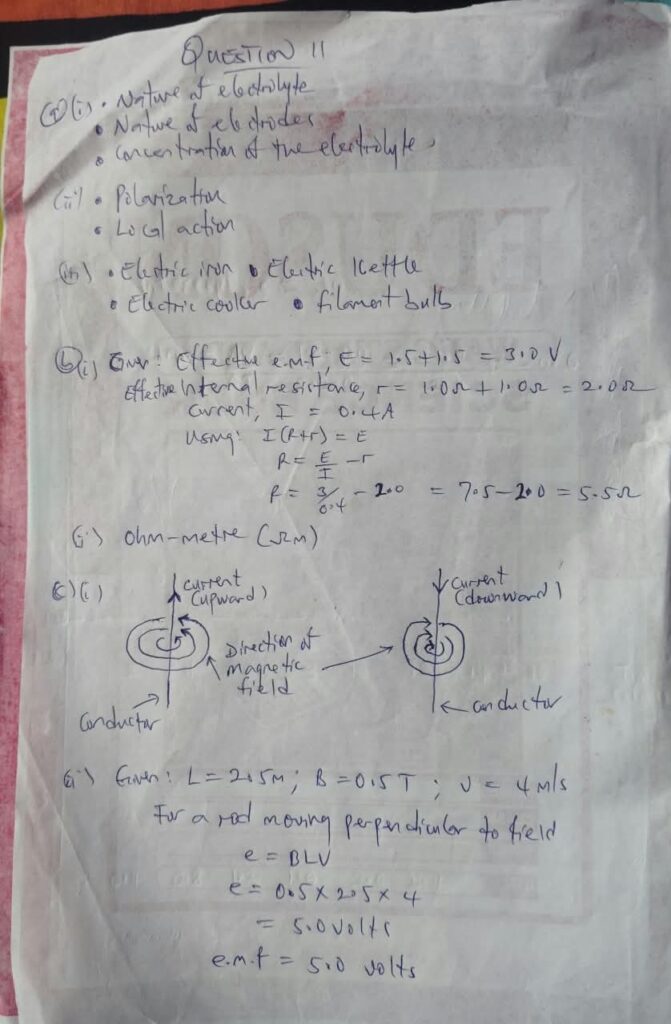
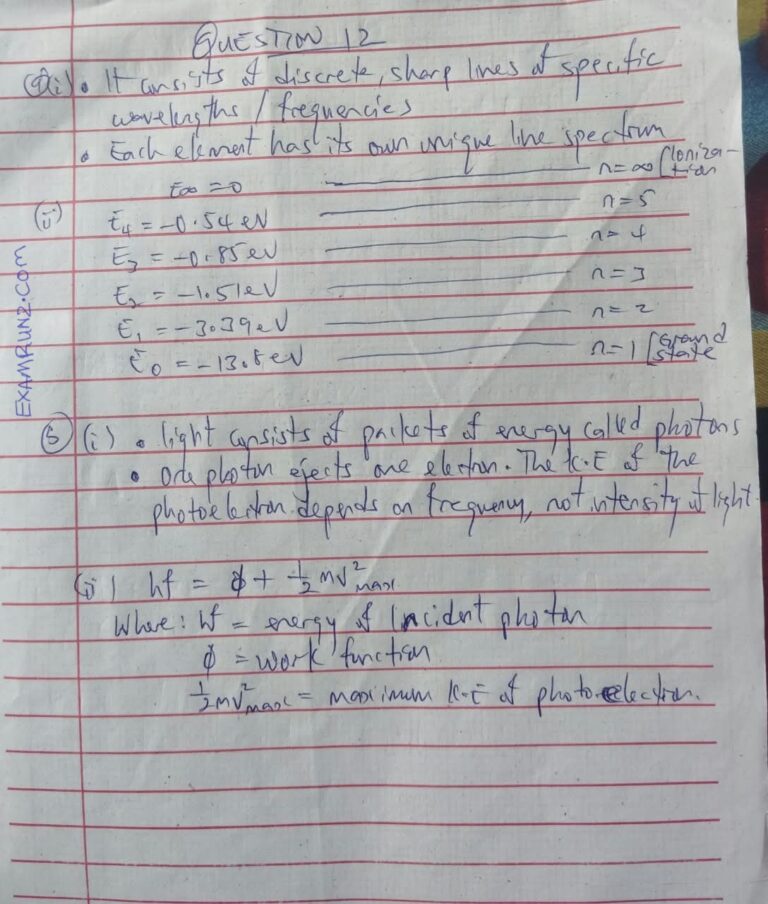
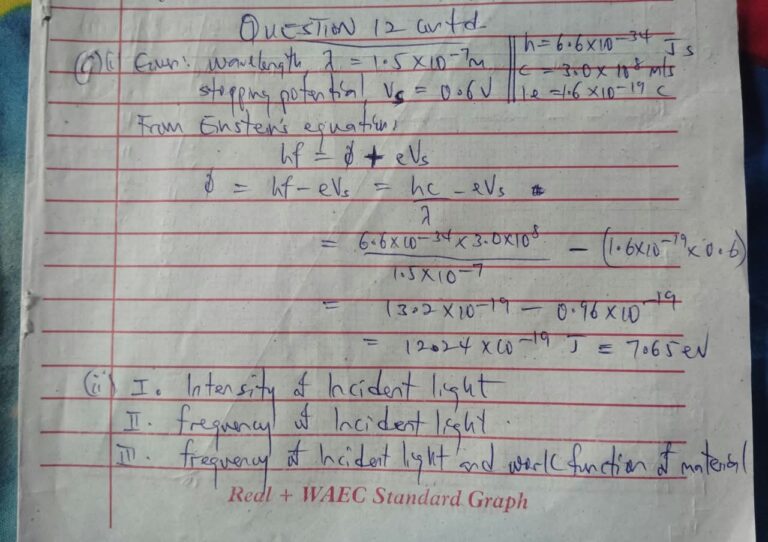
(12)
For WAEC GCE 2026 Questions and Answers, Solutions delivered to you, Contact ExamRunz Team via WhatsApp: 07034630271. All Subjects Available. We also deliver for NECO GCE & NABTEB GCE examinations.
If you found this post helpful or have any questions, please leave a comment below.